
The SuperBox: A Scammer’s Answer to a Broken Market#
The SuperBox looks like the kind of product that shouldn’t exist, yet in today’s world it makes perfect sense.
It is an unassuming black box with a seductive promise. You plug it in, connect to the Wi-Fi, and the streaming maze simply vanishes. There is no more app-hopping and no more wondering who owns which show this month. Most importantly, there is no monthly bill. It offers a return to the simplicity we thought we were getting when we first cut the cord.
But a device that offers everything for nothing is not a miracle. It is a business model with the price tag hidden in the fine print. Maybe that price is piracy, or maybe it is the safety of your home network. In many cases, it is your bandwidth being sold as infrastructure for someone else’s scheme. Usually, it is all of the above.
The SuperBox is more than just a shady gadget. It is a symptom of a larger problem. It appears when a market becomes so extractive and fragmented that a suspicious little box starts to feel like a form of consumer relief.
It Is Not a Loophole, It Is a Threat Model#
To be clear, I am not defending the SuperBox.
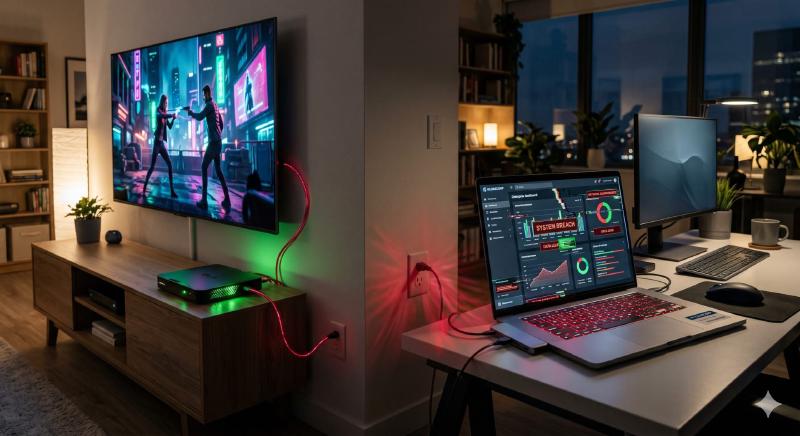
This is not just a “naughty” way to get free movies. Putting one of these on your network is the digital equivalent of giving your house keys to a stranger because they promised to paint your fence for free. Once it is inside, it is not just playing TV. It is a computer that can talk to the outside world, route untraceable traffic, and be updated remotely by people you will never meet.
The box is dangerous and the promise is fake. However, the most interesting question is not how the box works, but why normal people are buying them.
We are not talking about hackers or career criminals. We are talking about parents who just want to watch a local ballgame without needing a spreadsheet to find the right app. When enough normal people start taking abnormal risks, it usually means the official market has become so hostile that the unsafe alternative starts to look reasonable.
The SuperBox is malicious, but the demand for it is telling the truth.
How Streaming Built the SuperBox’s Pitch#
Streaming was supposed to be our escape from the old cable bloat. It was promised to be cheaper, cleaner, and built around the viewer. For a while, it felt like the future had finally won.
Then the future started looking exactly like the past.
Subscriptions multiplied and prices crept up. Ads returned even to the tiers we pay for. Shows vanish or migrate across platforms overnight. Streaming did not actually kill cable. It just disassembled it and scattered the pieces across a dozen apps, and now it charges admission at every single door.
That is the opening the SuperBox walks through. Its pitch is illegal and risky, but emotionally it hits the bullseye. One box, one payment, and everything in one place. It sells the one thing streaming originally promised, which was simplicity.
When the black-market version of a product is easier to navigate than the legal version, the industry has a massive problem.
The Enshittification Trap#
This is the inevitable result of enshittification.
It starts with a great product that earns your trust. Then the market saturates, growth slows, and the company starts looking for value it can claw back. They add a price hike here, remove a feature there, or force an ad tier on everyone. These are not deal-breakers on their own. Instead, they are a death by a thousand cuts that eventually changes the relationship. The customer is no longer the person the company is trying to win. They are just a resource to be managed.
People are not buying these boxes because they have lost their moral compass. They are buying them because they are tired. They are tired of paying more for less and tired of being monetized at every turn. The SuperBox thrives in that exhaustion. It offers a dangerous solution to a very real grievance. It tells the consumer that it can give back the simple thing that was taken away.
The Lecture Is Not Working#
The easy response is to scold the buyer. We tell them they should know better than to plug unknown hardware into their router. That is all true, but it is also a lazy critique.
Most people do not think in terms of command-and-control servers or residential proxies. They think about the game they cannot watch or the bill that just went up again. When our only solution is to tell consumers to be smarter, we are missing the point.
Companies need to ask themselves what kind of market they have built when a literal scam feels more honest to a customer than a legal subscription. The legitimate industry’s bills are legal, but they are confusing. Their catalogs are licensed, but they are unstable. Everything is above board, yet the customer still feels worked over.
The Receipt#
The SuperBox is not an anomaly. It is a receipt. It is the total cost of years of broken promises.
It reveals a truth the industry hates to discuss. People do not just pirate because they want things for free. Sometimes, they pirate because the paid version has become too hostile to navigate.
The SuperBox is the scam at the end of the scam. It is a trap wearing the costume of a bargain, promising to give people back the simplicity they were already sold once before.
The Scams Are Only Getting Better#
The most unsettling part of this story is that it is not over. In fact, it is likely just beginning.
If you go to the websites of major, trusted retailers today, you can still find these boxes for sale. They are usually buried in third-party marketplaces, tucked away between legitimate soundbars and cables, but they are there. They are marketed as 2026 “Premium Editions” with upgraded voice remotes and 6K resolution. The fact that they are available on a platform you trust gives them a thin layer of legitimacy that makes the trap even more effective.
We are entering an era where these devices are becoming more sophisticated. As the streaming market continues to fragment and prices continue to climb, the “black market” version of television is moving closer to the mainstream. We are reaching a point where the average person can no longer easily distinguish between a legitimate consumer product and a malicious network breach in a plastic shell.
This is the future of enshittification. It creates a vacuum of trust, and that vacuum is being filled by companies that do not care about your privacy, your data, or the security of your home.
The SuperBox is a warning for right now. But as long as the official way to watch TV remains a confusing, expensive mess, there will always be a “stranger on the Wi-Fi” waiting to offer you a better deal. It is going to get much harder to tell the difference between a bargain and a betrayal. We should all be paying very close attention to what we are being asked to plug in next.